Why Your Business Is Not Showing on Google Search
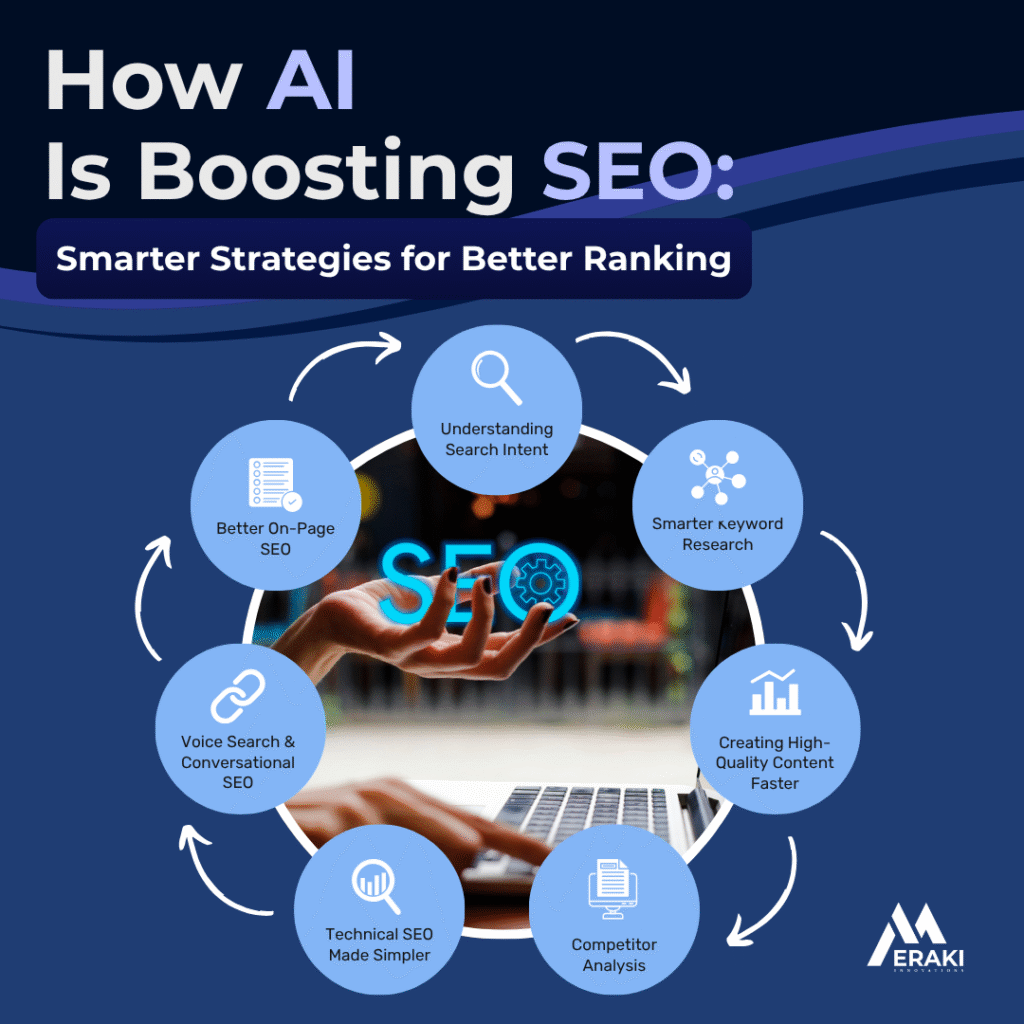
Search Engine Optimization (SEO) has historically been the process of optimizing websites for better ranking on search engines like Google. However, in recent times, the advent of Artificial Intelligence (AI) has drastically changed the nature of SEO. Activities that would have taken a long time before can now be achieved within minutes through the use of AI, and hence website optimization processes have greatly improved. AI has not only improved SEO but has also become an essential part of modern SEO. It doesn’t just enhance SEO activities; it makes them faster, smarter, and more efficient. From research to keyword creation to technical analyses to user behavior studies, AI has made it easy for marketers to make more informed decisions on SEO matters, as opposed to the previous guesswork. Search engines are becoming smarter by the day, and therefore those companies which have embraced AI are much better placed to optimize their websites. Here we take a look at the different aspects where AI has revolutionized SEO. Smarter Keyword Research Any good SEO strategy begins with keyword research. The right keywords can make it easier for search engines to understand what your content is about and link it to users looking for information on similar topics. Keyword research has always been a manual process involving the analysis of search volume, competition, and trends in various tools. While effective, this process used to be quite time-consuming. However, AI has made keyword research significantly faster, more accurate, and precise. While traditional tools used to give suggestions regarding high-volume keywords, AI tools take into account search intent, user behavior, and related topics to find keywords that will bring more traffic. The tool helps to detect long-tail keywords, analyze emerging search trends, and predict popular topics. For instance, rather than suggesting only a broad keyword like “digital marketing,” AI may recommend more targeted phrases such as “digital marketing for startups,” “SEO strategies for small businesses,” or “how to improve local SEO.” These longer, more specific keywords often have lower competition and attract users who are closer to making a purchasing decision. This highlights how AI targets more specific phrases instead of suggesting broad general keywords; this has made the overall process much faster. Creating High-Quality Content Faster Content continues to be one of the most powerful ranking signals when it comes to SEO optimization. Nevertheless, producing consistent high-quality blogs, landing pages, and product descriptions takes a lot of time and resources. AI technology can simplify the entire process of content production by brainstorming ideas for blogs, writing outlines and articles themselves, composing meta-descriptions, and generating captivating headlines. As a result, rather than beginning from scratch, marketers may start working with the generated AI drafts and improve them by using their own expertise, research, and unique style. Such an approach allows saving a lot of time without compromising content quality. However, keep in mind that the assistance of AI is always preferable to its replacement. Search engines always favor original content that showcases its author’s knowledge and value. Understanding Search Intent In today’s world, SEO is not about keyword stuffing on web pages anymore. Instead, today’s search engines focus on knowing the reason why a person has searched for something. Search Intent refers to that reason, and artificial intelligence helps in recognizing the search intent behind the query. If a person has searched “best DSLR cameras,” that individual must be looking for reviews or comparisons between them. On the other hand, if he/she has searched “buy Canon EOS R50,” then there is high purchase intent. Similarly, if he/she searches “how does a DSLR camera work?”, then his/her intent is educational. Using artificial intelligence, businesses can understand the search intent behind the queries and prepare content that would satisfy their expectations. Optimizing Existing Content Publishing new content is vital, but updating old content is equally as significant. Most websites have content that was successful at some point but then began to fall in ranks because of being outdated or due to increasing competition. AI-based SEO tools will help you optimize your older content by suggesting ways to improve it, for example: There are many benefits of refreshing old content; one of them is that you do not have to start from scratch because the page will already have authority in the search engine. Better On-Page SEO SEO on-page involves the process of optimizing individual components within a website to help the search engine comprehend its content. This is done with the aid of AI in the following aspects: Instead of going through each page manually, AI analyzes the whole website and detects areas where optimization is required. Technical SEO Made Simpler One of the hardest parts of optimization usually happens to be technical SEO, particularly when working on large websites. An AI-powered SEO tool would allow you to find out about such technical issues as: Some software programs actually prioritize technical SEO issues according to their influence on rankings. Without an AI algorithm, performing a full-scale technical SEO audit would take several days, but now it all takes minutes to be done. Smarter Competitor Analysis Understanding the actions of competitors is critical to developing SEO strategies. By using AI, companies can learn about their competitors’ websites and obtain such valuable information as: Rather than visiting competitors’ websites individually, AI automatically collects all the information and provides recommendations. Then, companies are able to produce better content that will fill the gaps in the competitive landscape. In short, AI can help you understand an anlyze your competition. Boosting the User Experience Google now tends to reward those websites that offer a good user experience. With the help of AI, businesses can learn more about how people behave on the company’s website through different metrics such as: This information will allow businesses to enhance the design of their website, optimize navigation features, design call-to-action buttons, and make the website engaging for visitors. Those websites that have a good user experience are likely to have low bounce rates and high
Why Your Business Is Not Showing on Google Search
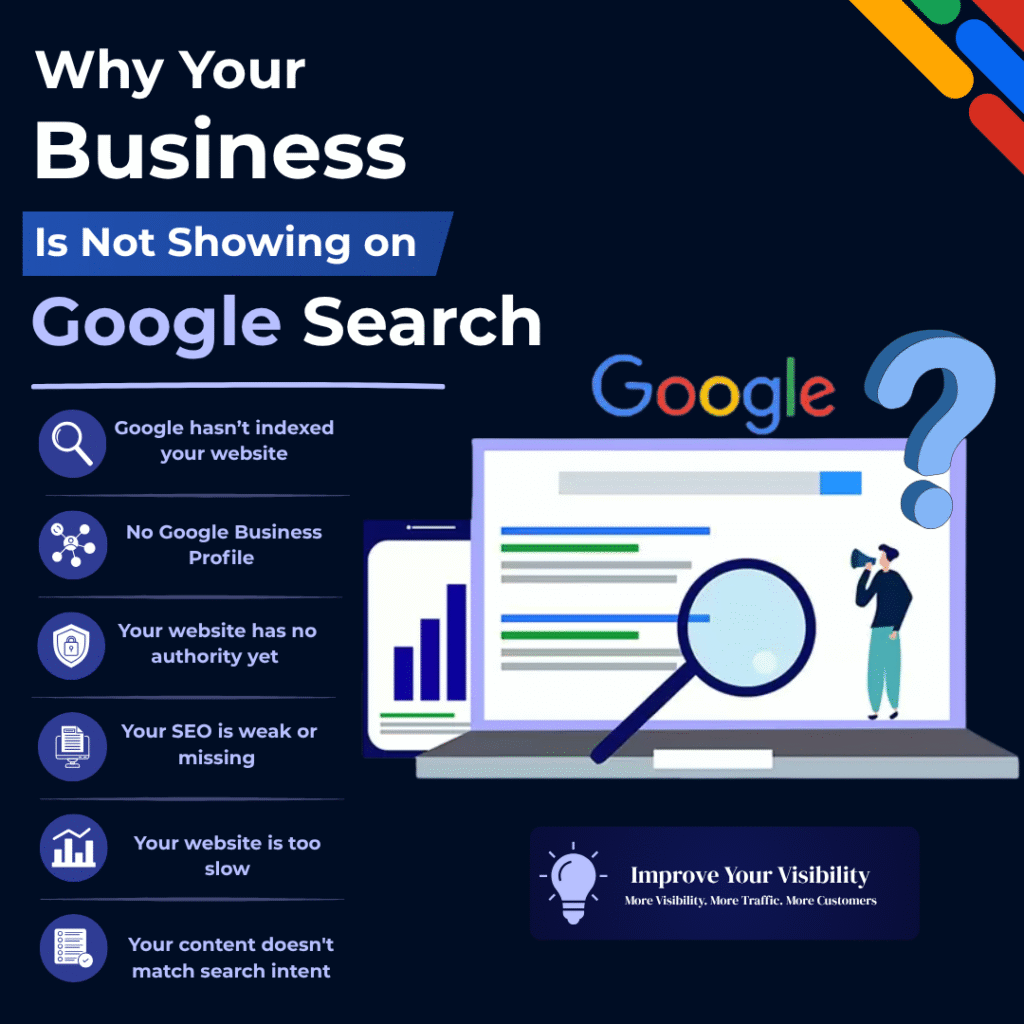
Wondering why your business isn’t showing up on Google Search? You might have a clean, simple website, but it still isn’t visible online. Learn some of the significant reasons and how to improve your visibility. Today, most customers search online before making a purchase or visiting a business to make sure the authenticity of the business. If your business does not appear on Google Search, you could be missing out on potential customers who are actively looking for your products or services. There are several reasons why this happens, and most of them can be fixed with the right approach. This blog will explore some of the most common reasons why your business may not be showing up on Google Search, and actions you can take to improve its visibility. 1. Google hasn’t indexed your website If your business isn’t appearing on Google Search, it simply means that Google doesn’t know your website exists. So, what can be done in order to improve its visibility? Submit your site to Google Search Console. This tells Google to find, scan, and show it in search results. But why is indexing so important in the first place? Think of indexing as adding your website to Google’s database. If Google has not discovered your website yet, it cannot show it to people who are searching online. Despite your website looking professional and containing useful information, it must be indexed before it can appear in the search results. It is also important to remember that indexing is not always instant. If your website or business is new, it may take a few days or even a few weeks for Google to scan and index it. During this period of time, continue updating your website with useful content instead of expecting immediate results. 2. Your SEO is weak or missing SEO (Search Engine Optimization). If your site is already indexed, it won’t show or rank without proper SEO. Hence, make sure you use relevant keywords that your customers search for. Add titles and meta descriptions, and structure your page properly. In simple terms, SEO helps Google understand what your website is about so it can match your website with the right searches. For example, if you own a bakery but your website never mentions words like “bakery,” “cakes,” or your business location, Google may not know when to show your website to your target audience. Hence, you must make sure to use keywords. However, good SEO is not always about using as many keywords as possible. Instead, focus on writing naturally while including keywords that are relevant to your business. This makes your content easier for both Google and your visitors to understand. You should also make sure your website is accessible in different ratios, and hence easy to use on mobile phones, as many people search for businesses using their mobile devices. A mobile-friendly website provides a better user experience and can improve your visibility on Google. 3. Your website has no authority yet What is “authority” in a website? By authority on a website, it means how trusted, popular, and reliable your website looks to Google. New or inactive websites take time to build trust with Google. Therefore, publish useful content regularly. However, regularly does not mean every day, but at least once a week, or more. It is crucial to be consistent. Building authority is a long-term process, so don’t expect your website to become highly visible overnight. As you continue publishing valuable content and improving your website, Google gradually gains more confidence in it. Moreover, get backlinks from other sites. These act like recommendations that signal to Google that your website is trustworthy. Over time, as your website gains more quality content and trusted backlinks, Google is more likely to show it in search results. When it comes to backlinks, focus on earning them from trusted, relevant websites rather than trying to get as many as possible. A few high-quality backlinks from reliable sources can have a much greater impact than many links from low-quality websites. 4. No Google Business Profile (for local businesses) If you’re a local business owner, having a Google Business Profile is essential for online visibility. Therefore, create and verify your profile, then add photos, services, and contact information. Additionally, encourage your customers to leave reviews, as they can help improve your business’s visibility on Google. A Google Business Profile does more than just display your business information. It also increases your chances of appearing in local search results and on Google Maps, making it easier for nearby customers to discover your business. To keep your profile effective, make sure it stays up to date. Regularly update your business information, upload new photos, and respond to customer reviews. An active and well-maintained profile builds trust with potential customers and shows Google that your business is active. 5. Your website is too slow Another crucial point is website speed. This plays an important role in both user experience and search rankings. If your website takes too long to load, visitors may leave before they even see your content. Google recognizes this behaviour and may rank faster websites higher in search results. Some of the common reasons for this issue include large images, too many plugins, and poor web hosting. Improving your website speed can create a better experience for visitors and help improve your search rankings over time. 6. Your content doesn’t answer what people are searching for Google aims to provide users with the most helpful answers to their questions. If your website contains very little information or only focuses on selling products without providing useful content, it may struggle to rank. Therefore, try creating blog posts, FAQs, or guides that answer common customer questions. Helpful content not only improves your chances of appearing in search results but also encourages visitors to spend more time on your website. Key Takeaways
Meta Announces New Features and Updates in 2025
Need to Know In 2025. Meta, the mother company of Facebook, Instagram, WhatsApp, and Messenger, introduced a series of important platform and advertising updates that are changing how brands connect with audiences. These changes focus on AI-driven automation, data privacy, and better campaign measurement, all of which are essential for modern marketers using Meta’s ecosystem. One of the most significant developments is the deeper use of artificial intelligence in ad tools. Campaigns now utilize AI to automate targeting, create different variations, and optimize performance. This helps people save time and improve results. Tools like Opportunity Score offer real-time insights into the health of ad setups, allowing for quicker adjustments and smarter budget decisions. Automation is no longer just a trend; it’s becoming central to planning and executing campaigns. Meta has also updated its lead generation and data collection methods. New changes to Lead Ads require users to confirm their contact information manually before submitting forms. This reduces low-quality leads and boosts the quality of incoming contacts. The focus is now on lead quality rather than quantity, which meets modern expectations for data transparency and user consent. Privacy and compliance are crucial themes in Meta’s updates. In response to the EU’s Digital Markets Act, Meta will allow European users to limit data sharing for personalized ads starting in 2026. Users who choose to share less data will see fewer targeted ads, which may affect how ad performance and targeting work in EU markets. This change highlights the growing significance of contextual advertising and responsible data practices. Beyond advertising details, Meta is enhancing the user experience across its social apps. Facebook’s redesign is now closer to Instagram’s layout, featuring smoother navigation, immersive search options, and better controls for managing content relevance. These changes in UI and UX affect how audiences engage with content, meaning brands need to adjust their creative formats to meet user expectations.